Software Built Around Your Workflow.
When generic tools create workarounds, duplicate data, or lost visibility, GDS builds around your users, permissions, integrations, data, and real operating logic.
What custom software should remove
Workarounds, duplicate entry, disconnected systems, unclear ownership, and workflows your off-the-shelf tools cannot model correctly.
- Validated problem and acceptance criteria
- Users, roles, and permission model
- Data and integration inventory
- Security and risk classification
- Maintainable deployment and handoff path
- 60-day defect warranty after production launch
Build only what removes the bottleneck.
Custom software should simplify the business, not create a larger maintenance problem. GDS scopes the minimum useful system first, then adds complexity only when the workflow requires it.
See the GDS process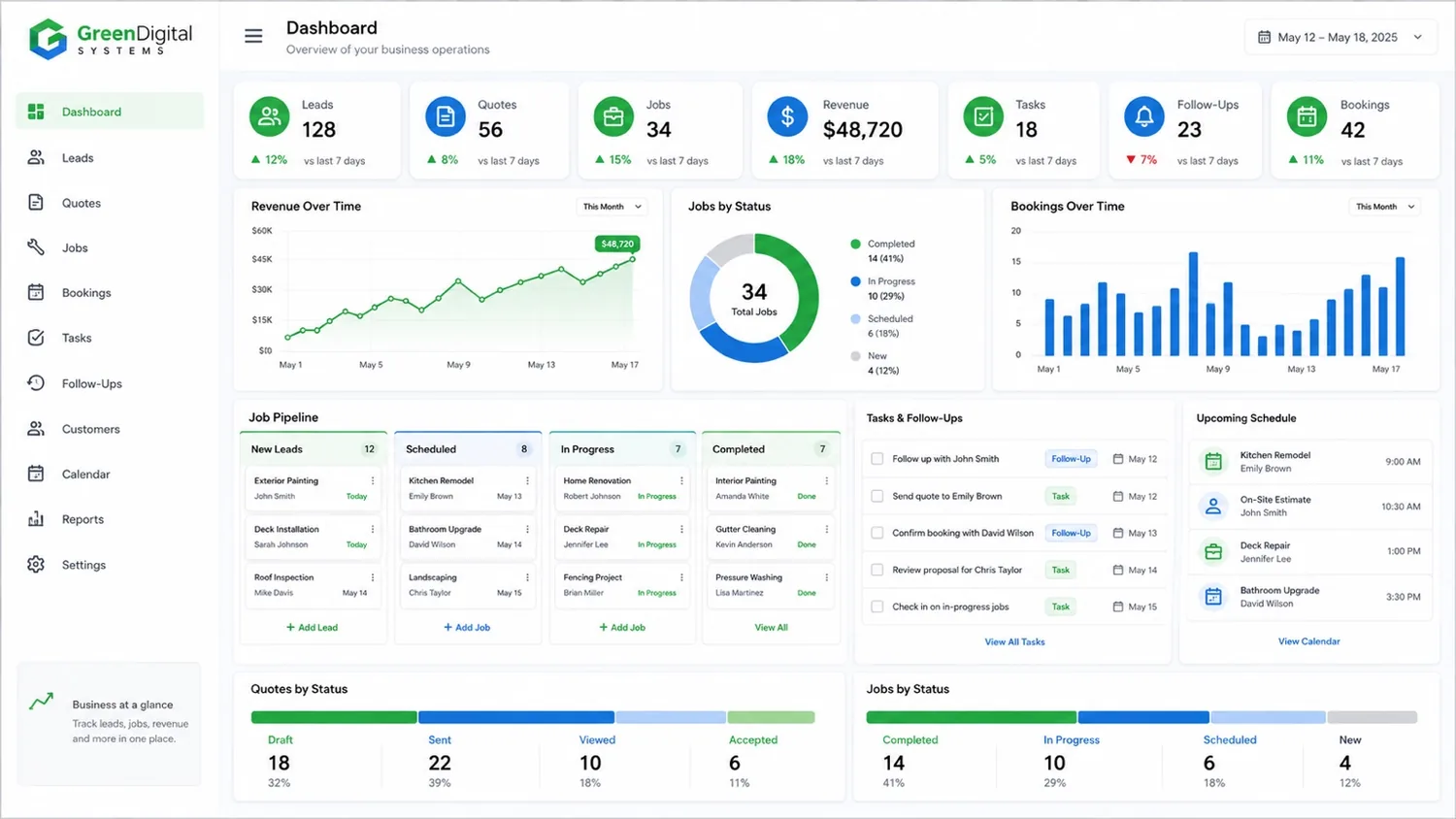
Concept service illustration. Example interfaces and metrics are illustrative, not verified client outcomes.
Questions that matter before you buy
What kind of custom software does GDS build?
Examples include CRMs, dashboards, quoting systems, client portals, canvassing tools, internal operations apps, calculators, workflow utilities, and multi-role applications. The feature list starts with the validated workflow, not a generic software package.
How is custom software priced?
Simple business tools typically start around $1,500-$3,000, operational systems around $3,000-$7,500, and advanced applications at $7,500-$20,000+. Discovery confirms the users, permissions, data, integrations, risk, and acceptance criteria before a final quote.
Who owns the finished system?
After full payment, the client owns the client-specific deliverable described in the agreement, subject to third-party licenses and retained GDS reusable components, frameworks, and know-how.
Know what needs to improve? Let’s scope the right next step.
Use the free call to validate the problem, avoid unnecessary scope, and leave with a clearer recommendation.